AI-Powered Product Recommendations: A Complete Guide
Why Every Online Store Suddenly Feels Like It Knows You
The reason why each and every online store senses you all at once.The explanation behind why each and every online store feels like they know you at the same time.
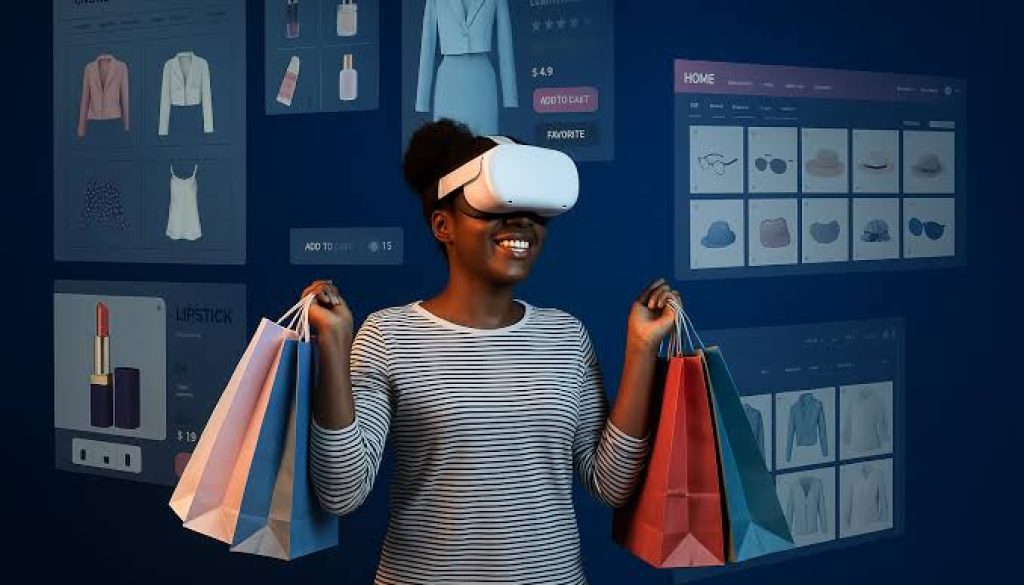
When you log on to a shopping app, the home screen already features shoes that you looked at the day before. This is no accident. In the background, there are AI-powered product recommendations. To predict your next request, these programs examine clicks, purchases, and browsing habits. This technology is essential for business owners and marketers today.
So, what are AI-powered product recommendations?
AI-powered product recommendations use machine learning to analyze shopping behavior and suggest relevant products. Instead of displaying the same catalog, these systems adjust to each visitor. They take into account past purchases, websites they’ve visited, and even the amount of time they spend on a certain website. Reducing search effort while increasing the likelihood of a sale is the main goal.
These engines are constantly changing with the behavior of customers at each stage of the shopping journey, unlike the traditional “featured products” sections. That can result in different suggestions for the same visitor on a Monday morning as compared to a Friday night. The system is not only sensitive to identity, but also to context.
The working of the Technology
The majority of recommendation systems are based on a combination of methods. Knowing these will assist marketers in choosing the correct setup for their store.
- Collaborative Filtering: Classifies customers with similar behavior and recommends to a group what similar customers purchased.
- Content-based filtering: Depends on the attributes of the product (such as price, color, category) to match with a shopper’s known choices.
- Hybrid models: Mix both methods together for increased accuracy, and these are now the norm in the industry.
- Real-time contextual models: Take into account widget type, location, and time of day.
Hybrid systems are becoming popular, as they address each other’s faults. A fusion of collaborative and content-based filtering gets better results than either approach used individually. This becomes important when your catalog is small enough that sometimes pure collaborative filtering doesn’t have enough data to be effective.
Why This Matters: The Numbers Speak Clearly
Owners of businesses sometimes doubt the benefits of customisation. According to the statistics, it is. It is anticipated that the market for product recommendation engines would grow from $7.42 billion in 2024 to $10.13 billion in 2025. The growth rate in only a single year is rather substantial.
Outcomes in the real world help the growth of the market. AI-powered product recommendations contribute to 35% of their revenue. Self-regulating cross-selling and upselling greatly helped Amazon to generate $716.9 billion in net sales in 2025. These are not some small trials. These are the very foundations of earning revenues.
The gains are similar, per capita, for smaller retailers. AI-powered recommendation engines can improve conversion rates by as much as 44%, especially when retargeting and on product pages. There is a 21% increase in the average order value after the use of personalization engines. Customer loyalty also sees an enhancement as AI systems with chat support have helped it enhance customer retention by 38% in some instances.
Additionally, customer expectations are evolving. 91% of consumers said they will be more inclined to purchase from firms that offer tailored suggestions. 73% of consumers want businesses to comprehend their unique demands, according to Salesforce. If you don’t adapt to this development, you risk losing clients to others who have.
Use Cases outside of Retail
Recommendation engines didn’t begin in the eCommerce world. They originated in the media and entertainment industry and then moved outwards.
| Netflix | Content discovery and thumbnail personalization | Deep learning on viewing habits |
| Spotify | Music discovery (Discover Weekly) | Reinforcement learning, acoustic analysis |
| Amazon | Cross-selling and upselling | Collaborative + content-based hybrid |
| eCommerce apparel stores | Style and size matching | Behavioral pattern recognition |
Netflix not only keeps tabs on what people watch, but also how they watch it, such as pausing and rewinding habits. Spotify is designed to keep listeners from becoming bored by mixing familiar songs with new ones. The same applies to apparel retailers. For those looking for a Leather Jacket NZ size online, they may receive recommendations for similar styles and cuts, which they’ve previously looked at, without having to come up with a second search.
The following are common mistakes made by businesses.
Not all of the implementations are successful. There are some common patterns that emerge from stores that have problems with AI Product Recommendations.
- Undertaking to rely on static rules rather than real data. Recommendations that are based on old purchase history feel irrelevant quickly.
- Ignoring mobile experience. The majority of browsing is currently on smaller screens, and recommendations must load instantly.
- Stuffing pages with suggestions. Too much choice can confuse shoppers and not assist them in making a choice.
- Skipping A/B testing. It’s difficult to determine which of the two recommendation styles is more effective without testing.
- Seeing personalization as “one size fits all”. When a consumer visits a business for the first time, they need to follow different guidelines than when they return.
Getting Started: Practical Steps for Business Owners
This technology isn’t a pure custom implementation, but can be used in an existing system. Several platforms provide plug-in recommendation tools, which can be easily incorporated into existing storefronts. First of all, audit what data you already have, because most stores have more browsing history than they think. After testing one recommendation slot on high-traffic pages, then test more before going any further.
Monitor individual metrics instead of general feelings. These metrics are more revealing of sales activity than a general sales picture: conversion rate, average order value, and repeat purchase rate. In fact, some studies indicate that people who find your website through AI-driven sources engage for 32% more time per visit, indicating higher engagement and increased sales.
FAQ Section
1. What are the differences between AI recommendations and traditional merchandising?
In traditional merchandising, fixed product pick-ups are displayed to all visitors. AI recommendations adapt to each person as they go along.
2. AI Product Recommendations are valuable for small businesses for several reasons:
Yes, AI Product Recommendations are beneficial to small businesses in a few ways:
Yes. Many eCommerce platforms have inexpensive plug-in tools, which means that smaller establishments can have the same technology without customizing their systems.
3. How much information is required for the recommendations to be effective?
It can be as simple as basic browsing and purchase history. The more customer interactions, the more accurate.
Key Takeaways
AI-powered Product Recommendations are no longer just a desirable function, but a standard requirement in eCommerce. The data reveals a clear trend of improvements in conversion, order value, and retention across all businesses and sizes. Perfect technology is not the determining factor for success; testing, adjusting, and observing real customers’ actions is the key. Do not undertake too much too soon; measure, and only grow what you’re sure is effective with your readership.